
LLM-assisted Specialised Translation: Prompt Engineering and Revision in Practice
- Tutorial
- Terminologie, Übersetzung & Sprachtechnologien
- 11. November
- 11:30 AM (MEZ) - 12:30 PM (MEZ)
- C7.3
-
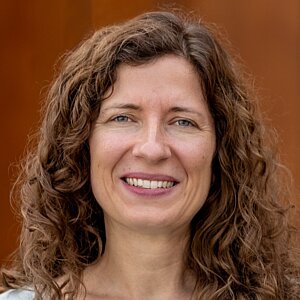
PD Dr Katrin Menzel
- Interim Professor (Translatology)
Inhalt
The presentation introduces a systematic workflow for AI-assisted translation and revision of specialised texts using large language models (LLMs), which was tested over the course of a semester in a university setting with MA students in Translatology. It extends findings presented at a workshop on teaching AI-based translation at the European Association for Machine Translation 2026 conference. It starts from an analysis of typical patterns in uncontrolled LLM outputs that lead to stylistic homogenisation and inconsistent quality. It then demonstrates how linguistic requirements can be translated into more model-appropriate prompts. At its core is a prompt architecture that enables optimised context integration and self-revision. The discussion considers ethical considerations as well as different types of LLMs, including open-source, proprietary, locally deployed systems and translation-specialised models. The workflow was primarily tested on the German-English language pair but is in principle transferable to other language combinations.
Das lernen Sie
Participants reflect on case studies and develop skills in controlling LLM-based translation by using LLM-optimised instructions and a structured prompt architecture, while also considering ethical aspects of LLM use.
Vorkenntnisse
Linguistic expertise, translation-related expertise and prior knowledge in the field of specialised communication